


Picking between iPhone and Android in 2026 isn’t really about “which phone is best.” It’s about which ecosystem fits your life—your apps, your devices, your budget, and what you care about most (camera, customization, privacy, AI features, or value).
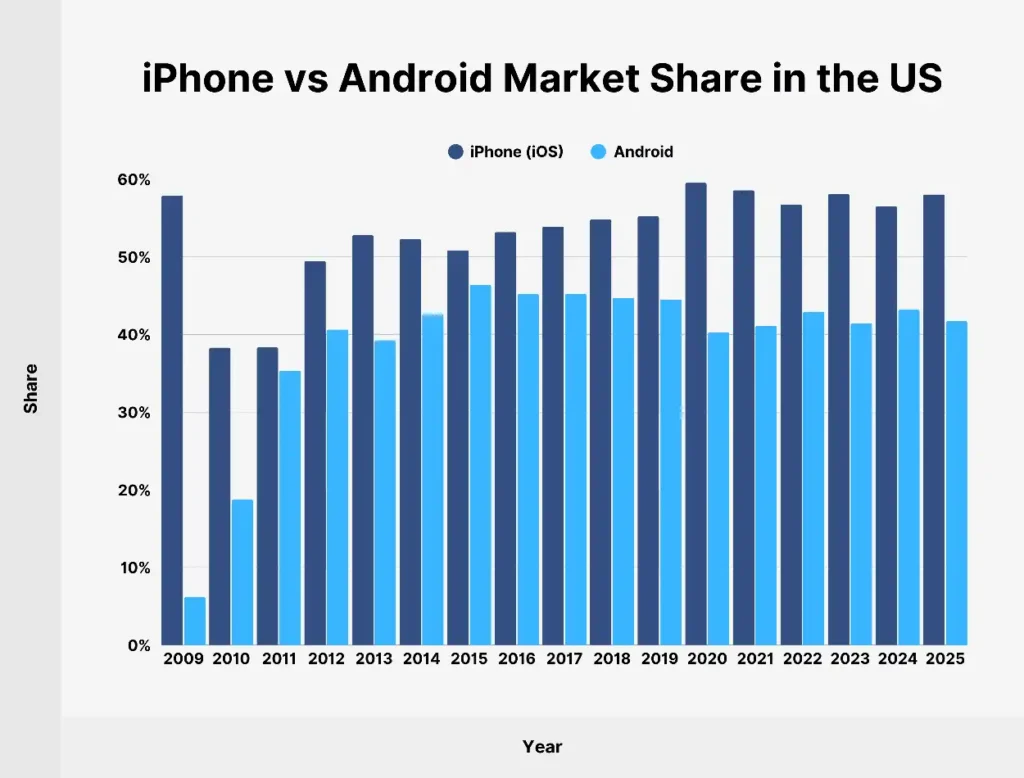
Both platforms are more competitive than ever. Android still dominates globally, while iPhone leads in the United States—so it’s less a battle of “good vs bad” and more a question of your priorities.
Let’s break it down in a practical, real-world way.
The Ecosystem Difference in One Sentence
- iPhone (iOS): best when you want everything to feel unified—iPhone, Mac, iPad, Apple Watch, AirPods—working together smoothly.
- Android: best when you want choice—different brands, price tiers, features, and deeper control over how your phone looks and behaves.
Market Reality in 2026: Who Uses What?
If you’re writing for a U.S. audience, the key trend is simple: iOS leads in the U.S., while Android leads worldwide. Recent StatCounter data shows iOS around 59% and Android around 41% in the U.S. (Nov 2025), while worldwide Android is about 72% and iOS about 28% (Nov 2025).
That matters because your friends/family and your local carrier deals often influence which ecosystem feels easier.
1) Hardware Choice and Value
Android wins for variety
Android gives you everything from affordable phones to ultra-premium flagships, plus specialty devices like foldables. Industry chatter suggests 2026 could be a big year for foldables, with more durable designs and broader mainstream interest.
iPhone wins for consistency
With iPhone, you get fewer models, but they’re highly refined. If you want a predictable experience, strong resale value, and long-term support, iPhone is hard to beat.
Best for value seekers: Android
Best for “just works” buyers: iPhone
2) Customization and Personalization
This is the gap that’s shrinking fast.
- Android has long led on customization: launchers, icon packs, default app choices, and deep system tweaks.
- iOS has caught up in meaningful ways, including more Home Screen customization like tinting icons/widgets and changing icon styles.
If you love making your phone feel unique, Android still wins—but iOS is no longer “boring by default.”
3) Privacy and Security
Both platforms take security seriously, but their philosophies differ:
- Apple leans into privacy-forward controls and a tightly managed app ecosystem. That can reduce some risks, but it also means more restrictions.
- Android has been pushing new security features too, including theft protection features designed to lock or secure your phone if it’s snatched. Google highlighted AI-powered theft detection and related protections in its Android updates.
Best for privacy-first simplicity: iPhone
Best for flexible security features across devices: Android
4) AI Features and Smarter Phones
In 2026, “smartphone experience” increasingly means AI features—from photo editing to on-device assistance and smarter organization.
- Android often ships AI features faster across Google’s ecosystem and select manufacturers.
- Apple tends to roll features out more cautiously, prioritizing consistency and privacy controls.
Also, cross-platform switching is becoming easier, and there are signals Apple continues improving migration experiences—something many switchers care about.
5) Apps, Games, and Services
For most people, both platforms have every major app. The real differences show up in:
- App quality and polish: Some creators still launch first or optimize better on iOS.
- Pricing and deals: Android phones often come with aggressive discounts, especially outside Apple’s premium pricing structure.
- Subscriptions: Apple’s service bundle approach can be convenient if you already pay for multiple Apple services.
Also, spending patterns historically skew higher on iOS, which is why many developers prioritize it.
6) The “Ecosystem Lock-In” Factor
This is where your decision gets real.
Choose iPhone if you already use:
- MacBook/iMac
- Apple Watch
- AirPods
- iPad
- iMessage/FaceTime as your daily communication defaults
Choose Android if you prefer:
- Windows PCs
- Google services (Gmail, Drive, Photos)
- Mixed-brand smart home gear
- Flexibility to switch phone makers without relearning everything
Who Should Pick iPhone in 2026?
iPhone is usually the better ecosystem if you:
- Want the smoothest “everything works together” experience
- Care about long-term software support and resale value
- Prefer privacy-forward defaults and simple settings
- Already own other Apple products
Who Should Pick Android in 2026?
Android is usually the better ecosystem if you:
- Want more hardware options and better deals
- Love customization and advanced settings
- Want cutting-edge form factors (like foldables)
- Prefer Google-first services and cross-device flexibility
FAQ
Is iPhone or Android better in 2026?
Neither is universally better. iPhone is best for a seamless ecosystem; Android is best for choice, customization, and variety.
Which is more popular in the U.S.?
iOS currently leads in the U.S., while Android leads globally.
Which one is better for privacy?
Many people prefer iPhone for privacy-focused defaults, but Android has also added major protections like theft-related security features.
Which one is better for budget buyers?
Android—because you have more brands, more price tiers, and more discounts.
Conclusion: The Best Ecosystem Is the One That Matches Your Life
In 2026, the iPhone vs Android debate is less about specs and more about fit.
- If you want a clean, consistent experience—especially if you already use Apple devices—iPhone is the easiest win.
- If you want flexibility, customization, and more hardware options at every price point—Android is the smarter buy.
If you’re still undecided, the best move is to list your “must-haves” (budget, camera, battery, foldable interest, app preferences, and what devices you already own). Your ecosystem choice becomes obvious once you do that.
